Gearbox Repair Specialists: Fix Manual & Automatic Transmissions
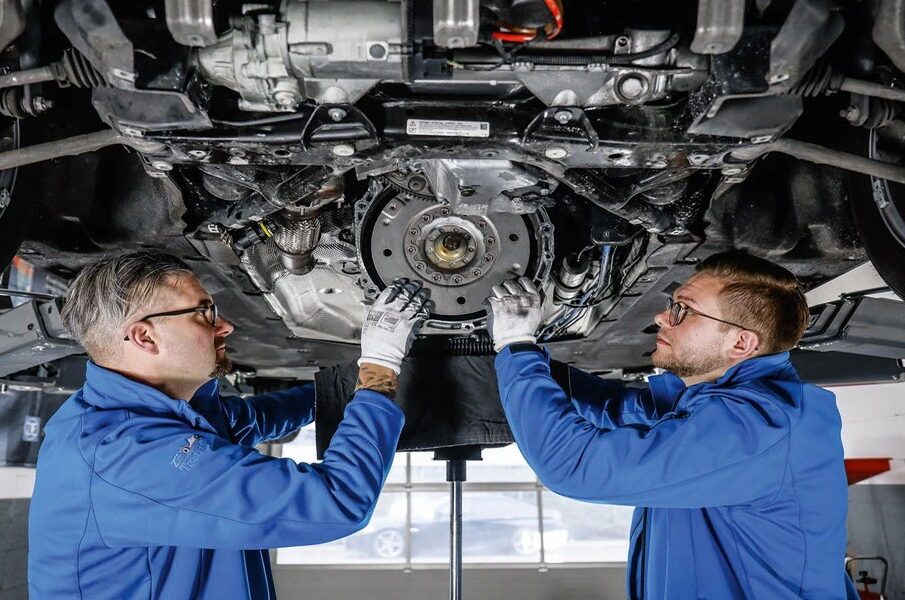
Gearbox repair represents a critical juncture in the automotive industry where technical expertise intersects with economic pragmatism, a field that has evolved considerably since the early days of motoring yet retains fundamental principles that govern successful intervention. The transmission, whether manual or automatic, embodies one of the most sophisticated achievements in mechanical engineering, a system where power flows through carefully calibrated pathways, where timing must be precise to the millisecond, where the margin for error remains vanishingly small. To understand the specialisation required for competent transmission work, one must appreciate the historical development of these systems, recognise the divergent evolution of manual and automatic designs, and grasp why generalised mechanical knowledge proves insufficient for addressing their complex maladies. In Singapore’s particular context, where vehicle ownership carries extraordinary financial weight and where the Certificate of Entitlement system creates unique economic pressures, the decision to repair rather than replace a failing transmission acquires dimensions beyond mere mechanical consideration.
The Historical Divergence of Transmission Technologies
The manual gearbox emerged from relatively straightforward mechanical principles: sliding gears on splined shafts, later refined with constant-mesh designs and synchroniser mechanisms that smoothed the transition between ratios. The automatic transmission followed a more byzantine path, beginning with hydraulic coupling devices, evolving through complex planetary gear arrangements, and eventually incorporating electronic controls that transformed what was once purely mechanical into a hybrid system bridging analogue and digital domains.
This divergence created distinct specialisations within the gearbox repair profession. The technician who excels at diagnosing manual transmission problems must possess intimate familiarity with clutch systems, synchroniser wear patterns, and shift linkage geometry. The automatic transmission specialist navigates a different universe entirely: hydraulic circuit diagrams, electronic solenoid operation, torque converter behaviour, and computer control strategies.
The Anatomy of Manual Transmission Failures
Manual gearboxes fail in characteristic patterns that reveal themselves to experienced diagnosticians. The most common afflictions include:
- Worn synchroniser rings that produce grinding noises and difficulty engaging specific gears
- Clutch system deterioration manifesting as slipping, judder, or incomplete disengagement
- Bearing failures announcing themselves through whining or rumbling sounds that vary with vehicle speed
- Shift fork wear causing imprecise gear selection and tendency to jump out of gear
- Input or output shaft damage resulting from bearing failure or impact loads
- Gear tooth wear from inadequate lubrication or manufacturing defects
According to veteran technicians providing transmission repair services in Singapore, “Manual gearboxes generally prove more durable than automatics in tropical conditions, but when they fail, the repairs often require complete disassembly and careful inspection of every component. Half measures rarely succeed.”
The Complexity of Automatic Transmission Repair
The automatic transmission presents challenges of an entirely different magnitude. Where a manual gearbox might contain several dozen components, a modern automatic houses hundreds of parts working in orchestrated precision. Hydraulic valves open and close in millisecond sequences. Clutch packs engage and release under computer control. Sensors monitor temperatures, pressures, and speeds, feeding data to control modules that adjust behaviour thousands of times per second.
Critical failure modes in automatic transmissions:
- Torque converter malfunction causing shudder, overheating, or loss of power multiplication
- Valve body deterioration resulting in harsh shifts, delayed engagement, or incorrect gear selection
- Solenoid failures producing erratic shifting behaviour or complete loss of certain gears
- Clutch pack wear manifesting as slipping, flaring during shifts, or inability to hold gears under load
- Pump failure eliminating hydraulic pressure necessary for transmission operation
- Electronic control issues from sensor failures, wiring problems, or software corruption
The specialist in automatic gearbox repair must combine mechanical aptitude with electronic diagnostic capability, understanding how computer systems interact with hydraulic mechanisms to produce seamless gear changes.
The Diagnostic Imperative
Both manual and automatic transmissions demand rigorous diagnostic protocols before intervention begins. The cost of misdiagnosis proves substantial, not merely in wasted labour but in unnecessary parts replacement and continued customer dissatisfaction. The methodical technician proceeds through established sequences: gathering symptom information, conducting test drives under varying conditions, analysing fluid condition and contamination, measuring hydraulic pressures where applicable, interpreting diagnostic trouble codes, and finally, when external testing proves inconclusive, performing internal inspection.
This diagnostic rigour distinguishes competent gearbox repair work from guesswork masquerading as expertise.
The Question of Specialisation
The divergence between manual and automatic transmission technologies raises fundamental questions about specialisation within the repair industry. Can a single workshop maintain expertise across all transmission types? Should technicians focus exclusively on one domain? The answer lies somewhere between these extremes, influenced by market demand, investment capacity, and the availability of skilled personnel.
Industry observers note that “Singapore’s automotive landscape includes everything from vintage vehicles with four-speed manuals to modern cars with nine-speed automatics and continuously variable transmissions. Workshops must choose whether to specialise narrowly or maintain broader capabilities with corresponding training investments.”
Economic Considerations in the Repair Decision
The choice between transmission repair and replacement carries economic implications that extend beyond immediate cost comparisons. A properly executed rebuild can restore a transmission to near-original condition at perhaps half the cost of replacement. However, this calculation assumes competent workmanship, quality parts, and realistic assessment of the transmission’s overall condition. A transmission with multiple failure points, extensive internal damage, or design weaknesses may prove a poor candidate for repair regardless of initial cost savings.
The Path to Informed Decisions
Vehicle owners facing transmission problems benefit from understanding the fundamental differences between manual and automatic systems, recognising that repair requirements differ substantially between these designs. They should seek specialists with demonstrated expertise in their specific transmission type, verified through training credentials, equipment investment, and customer testimonials. They should insist on thorough diagnosis before authorising work, detailed written estimates specifying parts and labour, and warranties that provide meaningful protection. These requirements, reasonable in any context, become essential when addressing systems as complex and costly as modern transmissions. The informed consumer, working with skilled professionals, navigates gearbox repair decisions with confidence grounded in knowledge rather than hope based on ignorance.



-
Gearbox Repair Specialists: Fix Manual & Automatic Transmissions
Gearbox repair represents a critical juncture in the automotive industry where technical ... -
-
-
-